Details of our aftercare services
After a landfill is closed, the so-called aftercare phase begins, during which the operator remains responsible for the environmental safety and security of the landfill. This phase can span several decades and involves a wide range of technical, organizational, and monitoring measures that must be carried out and documented on a regular basis.
A central element of aftercare is landfill gas management. Even after closure, biological decomposition processes within the landfill body continue to produce gases, particularly methane and carbon dioxide. To prevent the uncontrolled release of these climate-damaging gases, gas collection systems are operated to specifically capture the landfill gas and feed it into a treatment process.
To verify the integrity of the surface seal and detect potential leaks, surface emission measurements are conducted regularly. A so-called flame ionization detector (FID) is used for this purpose to measure methane concentrations near the ground. The measurement is performed in a grid pattern across the entire landfill surface and serves to detect leaks in the sealing system at an early stage. The results are incorporated into the assessment of the emission situation and form part of the regulatory reporting requirements.
Another important component of post-closure management is leachate collection and drainage. To ensure the long-term functionality of the underground drainage systems, they are regularly cleaned using a high-pressure suction-flushing truck. This process removes deposits, sediments, and biological growth that could obstruct drainage. Cleaning is usually performed via special flushing shafts that were already incorporated during the landfill’s construction.
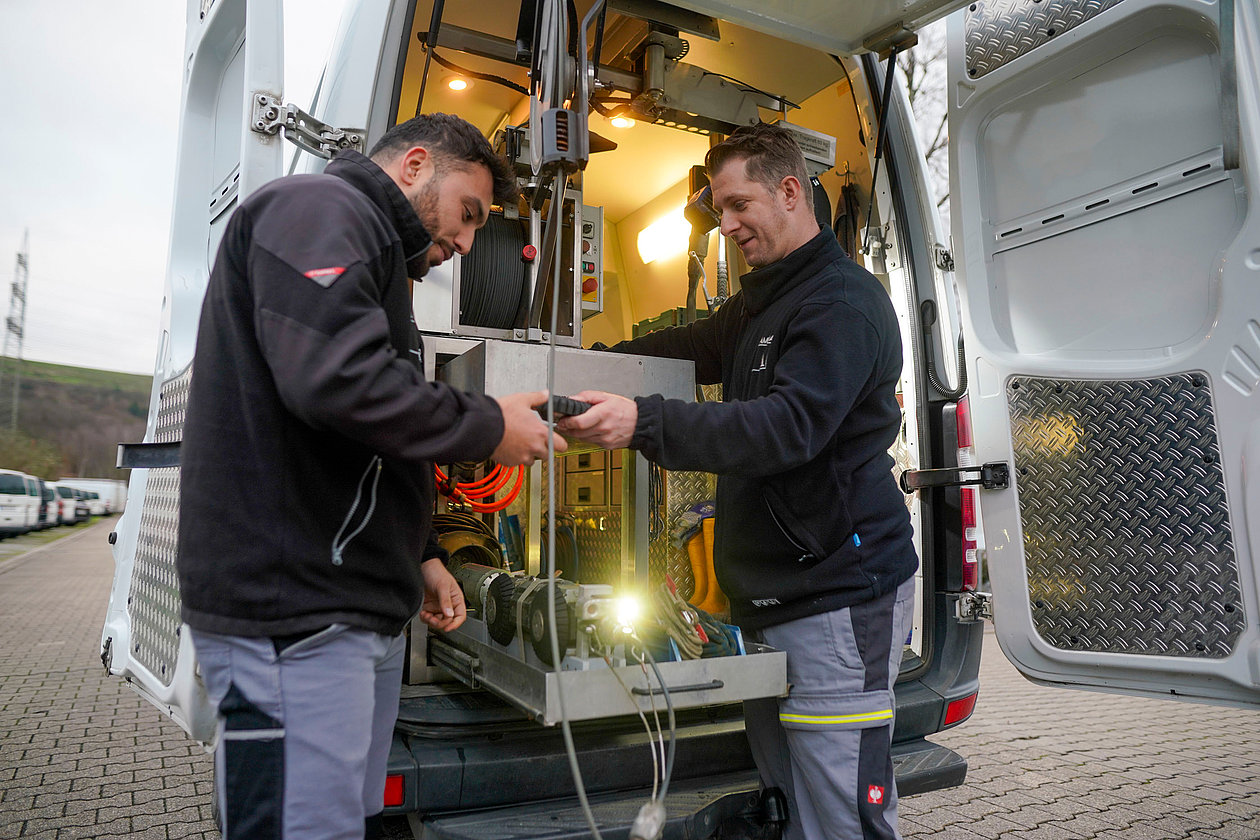
In addition, a camera truck equipped with TV inspection technology is used to visually inspect the condition of the underground pipes. With the help of high-resolution camera technology, damage, deformations, or blockages can be detected early and addressed specifically. These inspections are particularly important because many of the drainage systems must remain in operation for decades, and a failure can have serious consequences for the environment.
Overall, landfill aftercare is an essential component of landfill operations—even long after the active disposal phase has ended. It ensures that the landfill poses no danger to people or the environment and that legal requirements are met on a permanent basis.