Natural gas
Implementation of the EU Methane Regulation (EU) 2024/1787
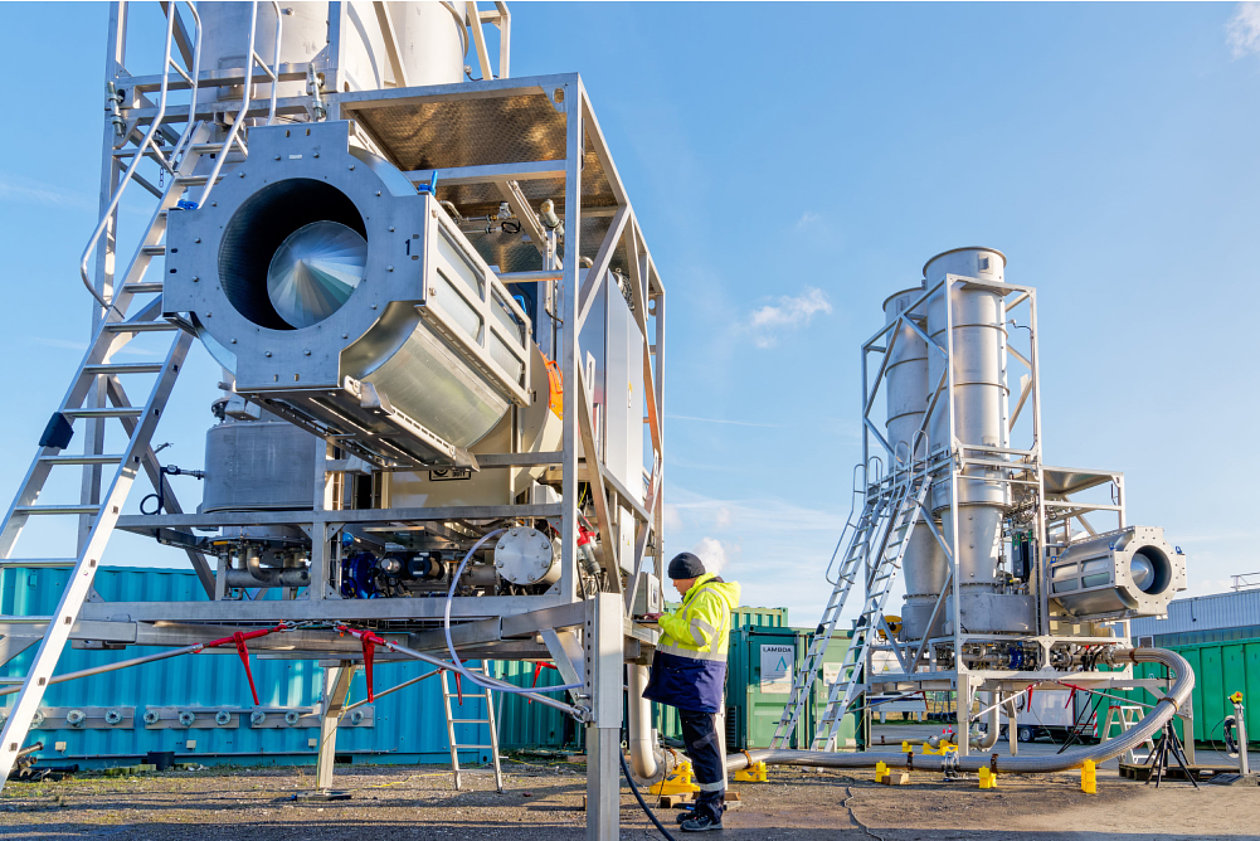
Flaring systems in the natural gas transportation network are used for the targeted reduction of methane emissions. Methane is a highly effective greenhouse gas - significantly more harmful to the climate than CO₂. During flaring, methane is burned in a controlled manner and converted into CO₂ and water vapor. This significantly reduces the climate impact of emissions.
The EU Methane Regulation has significant implications for operators of natural gas transmission and distribution networks, particularly with regard to the emptying of pipelines and pipeline sections during maintenance work. To relieve pressure in the natural gas network, cold blow-offs were often used, which led to considerable methane emissions. If there is no technical alternative such as recompression or recirculation, the gas can be flared in a controlled manner. During flaring, methane is oxidized to CO₂ and water, which significantly reduces the impact on the climate, as CO₂ has a much lower global warming potential than methane.